 EN


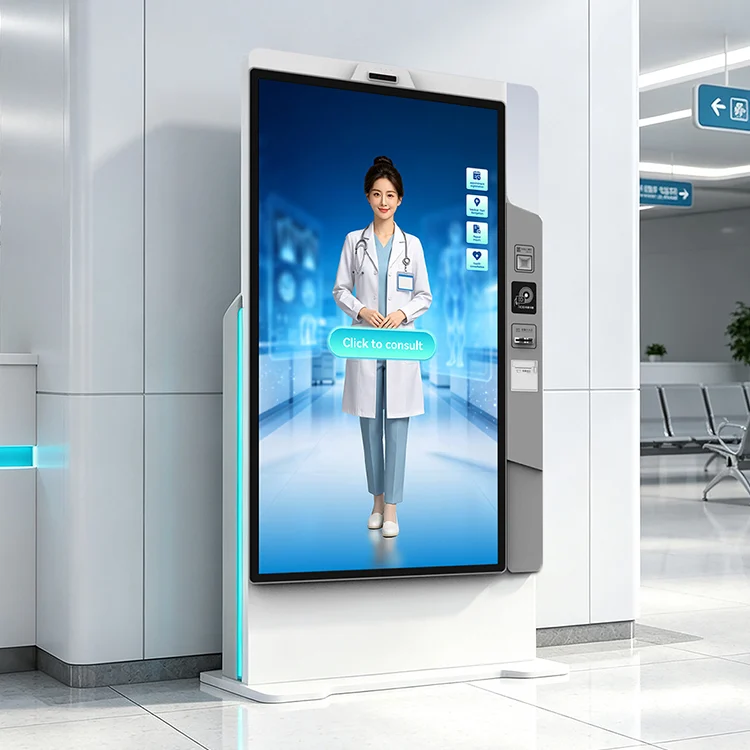
Unifying Fragmented Systems with AI Digital Human Series Orchestrators
The legacy integration challenge: Siloed SCADA, GIS, CRM, and ERP systems delaying response times
Public utilities commonly operate SCADA, GIS, CRM, and ERP systems in isolation—each with its own data model, interface, and update cadence. Field crews manually cross-check status across screens; dispatchers retype outage codes between platforms; customer service agents lack live asset context. These disconnects add critical minutes to incident resolution and increase the risk of human error. A single outage can require five to seven system lookups before crew assignment. Fragmented workflows also erode audit integrity: updates aren’t synchronized in real time, creating version drift and inconsistent records. The result is slower restoration, redundant data entry, and higher operating costs. Without a shared orchestration layer, utilities cannot convert existing system data into coordinated, actionable insight—the core gap the AI Digital Human Series was designed to close.
How AI Digital Human Series acts as a semantic orchestrator—normalizing data, delegating tasks to domain agents, and enabling human-in-the-loop validation
The AI Digital Human Series serves as a semantic orchestration layer that unifies legacy systems—not by replacing them, but by normalizing asset, location, customer, and work-order data into a common operational vocabulary. It then delegates discrete, rule-based tasks—such as outage detection, crew dispatch, or permit validation—to purpose-built domain agents. Each agent interacts natively with source-system APIs, ensuring all records remain current where they live. Crucially, human-in-the-loop validation is embedded at decision-critical junctures: for example, a dispatcher reviews and approves an automated isolation plan before field orders are issued. This preserves operational accountability while eliminating repetitive manual steps. The orchestration logic tracks SLAs, compliance flags, and approval history across environments—transforming fragmented platforms into a cohesive utility workspace. Response times improve because contextual information is assembled before human intervention is needed. Audit readiness strengthens, too: every delegated action is logged with source system, timestamp, action taken, and approver—creating a complete, traceable chain of custody.
Enabling Predictive Maintenance and Real-Time Grid Optimization via AI Digital Human Series
Utility control rooms have long relied on scheduled inspections and threshold-based alarms—a reactive posture ill-suited to preventing fast-evolving failures. The AI Digital Human Series enables a prescriptive operating model by continuously fusing real-time grid telemetry, weather forecasts, and multi-source asset health indicators. Rather than flooding operators with raw alerts, it delivers a prioritized risk view—enabling proactive interventions that reduce unplanned outages, extend equipment life, and focus field resources where failure probability is highest. Because each recommendation includes a plain-language explanation (e.g., “vibration drift + oil discoloration note suggests bearing degradation”), engineers move confidently from alert triage to condition-based action.
From reactive to prescriptive: Reducing unplanned outages using multi-modal telemetry fusion (SCADA + IoT + field NLP logs)
Grid data remains inherently fragmented: SCADA provides breaker status and load flow; IoT sensors deliver temperature, vibration, and partial discharge metrics; and field crews record unstructured observations. The AI Digital Human Series resolves this by fusing these modalities into a unified operational picture. Natural language processing extracts failure signals from maintenance logs—phrases like “oil discoloration” or “unusual hum”—and aligns them with numeric telemetry trends. This multi-modal correlation detects subtle, cross-domain patterns invisible to siloed monitoring: for instance, mild thermal rise combined with a field note about audible anomalies may indicate early transformer stress. When such convergence occurs, the system triggers a prescriptive work order—well before thermal runaway or failure. As the U.S. Department of Energy notes, AI-driven analytics are pivotal to improving grid planning, operations, and resilience by anticipating both demand shifts and equipment anomalies. This condition-based approach reduces mean time to repair, cuts unnecessary truck rolls, and improves SAIDI and SAIFI performance—while avoiding fixed-interval maintenance on healthy assets. Human operators retain final authority to validate or override recommendations, ensuring all actions comply with safety protocols, switching rules, and regulatory constraints.
Transforming Customer Operations and Regulatory Compliance with AI Digital Human Series
Public utilities face parallel pressures: high-volume, low-complexity customer interactions—and stringent, jurisdiction-specific reporting mandates. The AI Digital Human Series bridges these demands by converting routine conversations into structured, compliance-aware exchanges. Rather than routing callers through rigid IVR menus, digital humans gather required information conversationally—while simultaneously generating a time-stamped, auditable record of every interaction. This shifts human staff from transactional data entry to exception handling and quality assurance.
Automating high-volume, compliance-sensitive interactions—FERC, CPUC, and EPA reporting embedded in conversational workflows
In regulated environments, even routine customer contacts can trigger binding obligations under FERC, CPUC, or EPA rules. The AI Digital Human Series embeds jurisdiction-specific requirements directly into dialogue flows: mandatory fields, approved disclosures, consent verbiage, and deadline tracking are all baked into the conversation—not added as after-the-fact paperwork. For example, when a resident reports a suspected gas leak, the digital human confirms address, odor description, and safety instructions delivered—then auto-generates a compliant incident record aligned with PHMSA and state pipeline safety standards. Similarly, for interconnection requests, the system collects meter number, proposed capacity, and attestation language before routing to engineering review. Every transcript and metadata bundle becomes a ready-made compliance artifact—eliminating manual re-entry, reducing documentation errors, and shortening reporting cycles. Rules are configured once per jurisdiction, ensuring alignment across federal, state, and local requirements without custom integrations. Human reviewers maintain oversight for exceptions and final submissions, preserving accountability. In practice, front-line customer service evolves into a real-time regulatory data capture layer—delivering regulatory rigor without compromising responsiveness or clarity for the end user.
FAQ
How does the AI Digital Human Series improve response times?
It integrates siloed systems like SCADA, GIS, CRM, and ERP into a unified workspace, assembles contextual data in advance, and delegates tasks to domain agents.
What is predictive maintenance, and how does AI Digital Human Series enable it?
Predictive maintenance involves proactive interventions using real-time data fusion from telemetry, weather, and asset health indicators—prioritizing actions based on risk.
Can the AI Digital Human Series handle jurisdiction-specific regulatory requirements?
Yes, it embeds rules for FERC, CPUC, EPA, and others into conversational workflows, ensuring compliance is maintained seamlessly.