 EN


Architecting True Inclusion: The Evolution of Assistive Public Terminals
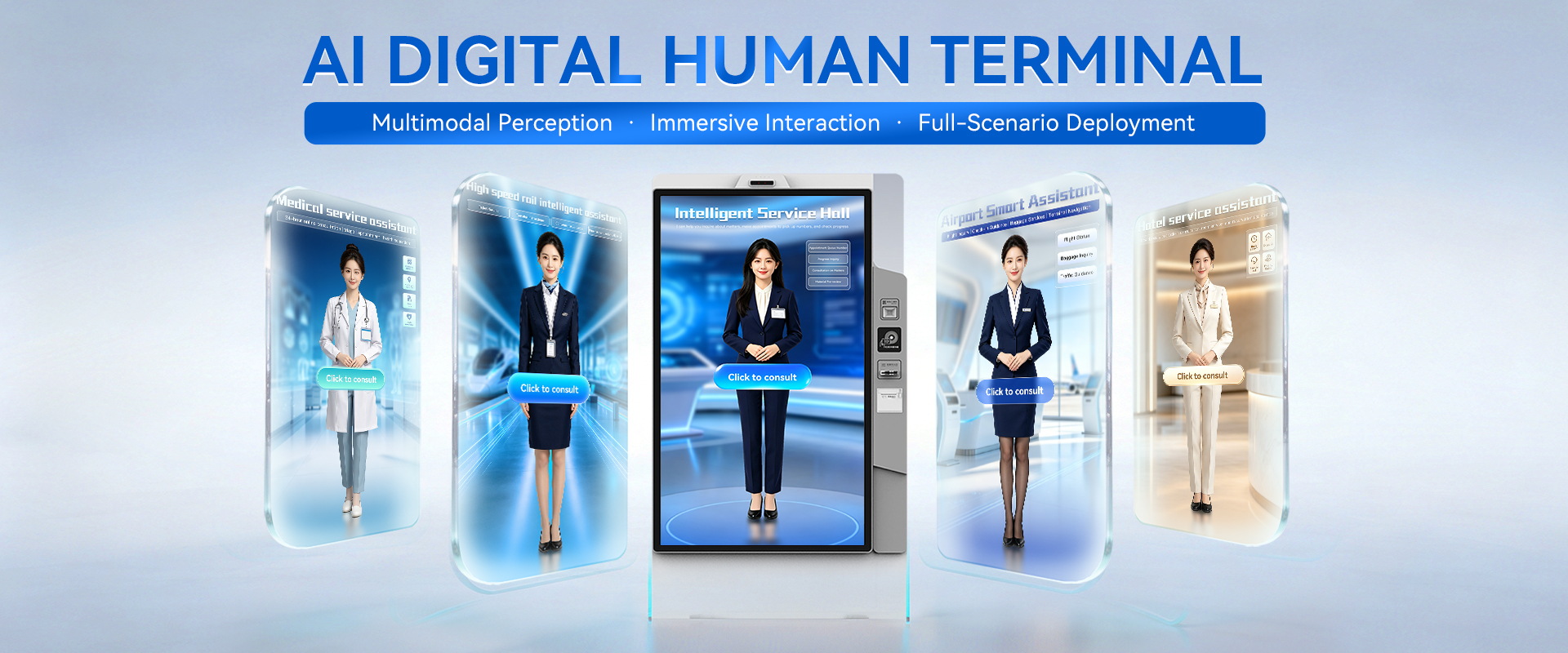
When field-testing self-service infrastructure across municipal buildings and transit hubs, accessibility has historically been treated as a reactive checklist item rather than an architectural priority. Standard touchscreens and rigid audio jacks frequently alienate visitors with motor, visual, or hearing impairments. Groundbreaking conversational artificial intelligence changes this dynamic completely. By deploying the AI Digital Human Series, organizations can replace cumbersome interfaces with lifelike, responsive digital avatars that interact naturally via speech, gesture, and contextual intelligence. During recent usability deployments in smart civic centers, integrating the AI Digital Human Series demonstrated that barrier-free design requires more than high contrast; it demands empathetic, multimodal communication layers that adapt dynamically to every individual's unique physical and cognitive capabilities.
Bridging Communication Divides Through Real-Time Multimodal Intelligence
Standard kiosk models often fail deaf or speech-impaired users due to their absolute reliance on text-heavy menus or audio prompts. Experts in human-computer interaction emphasize that modern assistive systems must bridge this gap instantly. The AI Digital Human Series utilizes advanced speech-to-text algorithms and responsive sign language animation engines to establish bidirectional fluency. When a visitor approaches, the AI Digital Human Series detects auditory cues or manual inputs, converting spoken inquiries into dynamic sign language or vice versa without perceptible latency. This level of responsiveness eliminates social friction and independent navigation barriers. Drawing from field deployment data, this technology ensures that visitors with diverse communication needs receive immediate, accurate answers, transforming solitary public interactions into warm, conversational experiences.
Elevating Physical and Sensory Independence via Spatial Voice Navigation
Navigating complex public environments presents immense challenges for wheelchair users and visually impaired individuals who cannot easily reach physical screens or read tiny text prompts. Industry standards established by universal design bodies highlight the necessity of spatial voice navigation and contactless control. The AI Digital Human Series addresses this by combining high-definition visual avatars with robust spatial audio and voice-activation capabilities. Users can simply speak commands to retrieve custom maps, request physical assistance, or adjust interface layouts for enhanced legibility. By shifting the control paradigm entirely to voice and gesture, the AI Digital Human Series grants disabled visitors absolute autonomy over their physical movement through public spaces, proving that advanced hardware and empathetic software can harmoniously dismantle environmental obstacles.
Ensuring Trust, Data Provenance, and Security in Public Deployments
Deploying artificial intelligence in public-facing sectors introduces profound security and data privacy obligations. According to recent cybersecurity benchmarks in smart infrastructure, public terminals must maintain absolute data provenance and rigorous identity verification protocols to prevent spoofing and data breaches. The AI Digital Human Series incorporates enterprise-grade encryption and verifiable data pipelines, ensuring that every user interaction, accessibility preference, and query remains strictly confidential. Furthermore, the AI Digital Human Series relies on tamper-proof datasets to deliver official, verified information, protecting vulnerable visitors from digital misinformation. This uncompromising commitment to transparency and security reinforces institutional trust across diverse demographic communities globally.
Manufacturing Excellence and Tailored Supply Chain Integration
Delivering high-performance assistive technologies at a global scale requires exceptional hardware engineering, rigorous quality control, and robust global supply chain capabilities. Organizations seeking to deploy the AI Digital Human Series benefit directly from advanced manufacturing ecosystems specialized in durable, industrial-grade kiosk hardware and seamless software integration. Backed by decades of precision engineering expertise and comprehensive supply chain mastery, Yuhao Wantong delivers reliable terminal hardware solutions built to withstand intensive public usage. Whether outfitting busy transport terminals, cultural galleries, or civic centers, Yuhao Wantong ensures that every unit housing the AI Digital Human Series meets stringent international safety certifications, empowering international partners worldwide to construct truly inclusive, future-proof public spaces.
Table of Contents
- Architecting True Inclusion: The Evolution of Assistive Public Terminals
- Bridging Communication Divides Through Real-Time Multimodal Intelligence
- Elevating Physical and Sensory Independence via Spatial Voice Navigation
- Ensuring Trust, Data Provenance, and Security in Public Deployments
- Manufacturing Excellence and Tailored Supply Chain Integration